← all book reviews · review 36 / 82
money
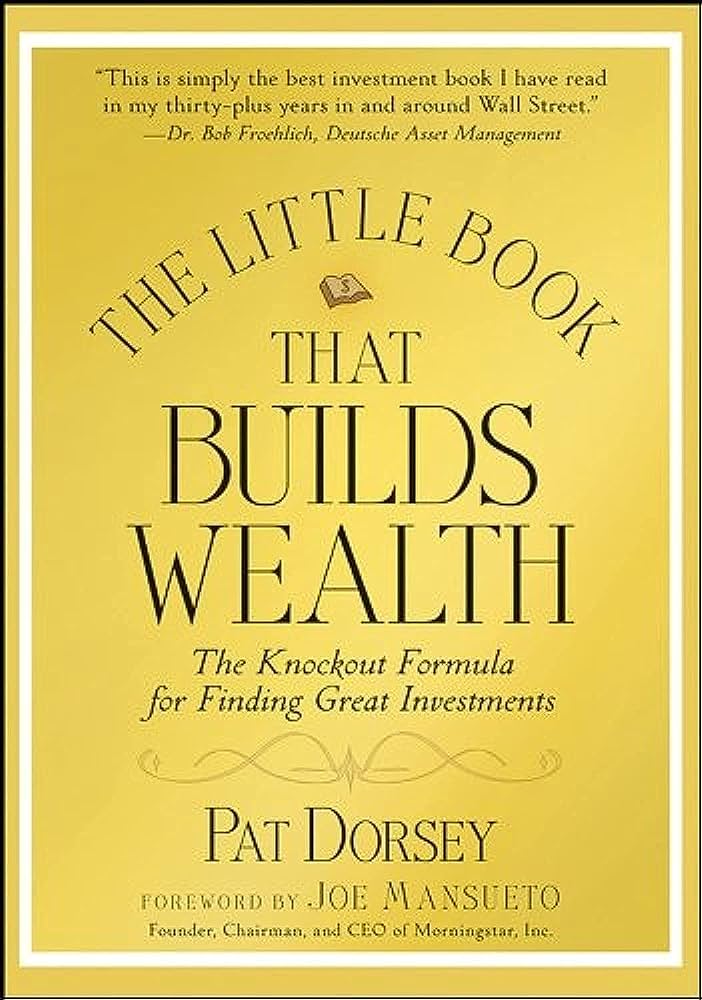
The Little Book That Builds Wealth
rated 5 out of 5read may 2021
notes · 1 min read

Read Daniel's notes about The Little Book That Builds Wealth on the booksense app
open booksense →Can one of the best business books of all time actually be an investment book?
Well, at least I think so (and Dr. Bob Froehlich from Deutsche Asset Management seems to agree with me to some extent).
Structural competitive advantages or as Pat Dorsey calls it “Economic Moats” are the characteristics of a company that can define a business as an outstanding business that has the potential to be around for a long long period of time and keeps printing money for its shareholders or just as a mediocre one which will be gone by any market whim.
“Moats are structural characteristics inherent to a business, and the cold hard truth is that some businesses are simply better than others. Great products, great size, great execution, and great management do not create long-term competitive advantages. They are nice to have, but they are not enough.”
The author categorizes structural advantages as following:
- Intangible assets: like brands, patents, or regulatory licenses that allow a company to sell products or services that can’t be matched by competitors
- Products or services that may be hard for customers to give up, which creates customer switching costs
- Network effects: that with each new user the value of the business increases for its users
- Cost advantages: stemming from the process, location, scale, or access to a unique asset, which allows a company to offer goods or services at a lower cost than competitors
(Apple seems to like this list …)
I noticed while watching the “Shark Tank” show that all investors recognizing the same characteristics as their investing criteria.
Absolutely insightful and educative. I feel like I got a new lens which through it I can see much better.
Pat Dorsey great piece of work.