Why an innovator?
(skip this section if you don’t wanna hear me rambling about personal stories)
“Who do you wanna be when you grow up?” My nanny asked me when I was 4 years old.
“I wanna be a construction worker!” I responded, then continued: “so I can make money and buy you a nice dress!”
Probably the reason I said that was because of my dad’s involvement in building houses back then which gave me the chance to observe construction workers who worked for him get paid in cash at the end of each working day. Also I had learned by that age from movies, people buy each other nice gifts like a dress to express their love and gratitude.
Years passed, and now and then my mom would tell this story to relatives who came to visit, to get a laugh. Every time I heard that story, I smiled, but it also made me drown in thoughts about what would be my updated answer to that difficult question.
By the end of the first year in high school, I had some rough ideas on the direction I wanted to continue my studies when I eventually get into a university after high school.
Since I had to choose a major in the second year of high school, between Mathematics & Physics, Natural Sciences, and Humanities, I had to have a rough idea of who I wanted to become by age 15. No pressure, of course!
If I wanted to become a doctor, dentist, nurse, pharmacist or enter into some other medical or biology related field, I had to choose Natural Sciences.
If I wanted to become a lawyer, historian, economist, journalist, diplomat, or a philosopher, I had to choose Humanities.
And lastly, if I wanted to become an engineer, architect, computer scientist, or physicist I had to choose Mathematics & Physics.
I chose Math, mainly because I couldn’t stand the thought of dealing with sick people all day long for the rest of my life even though becoming a doctor would give me the ultimate social status ever known to man (specially man in the Middle East). Not to mention if I could ever pull off a successful entry into a medical school in the first place.
I decided I will become an electrical or mechanical engineer because everyone in our small town seemed to agree this is what all high-IQ people who don’t want to become a doctor would do. And since I only had A+ or A grades on all subjects, always, I considered myself nothing less than high-IQ people, obviously.
In the last year of high school I was studying hard for the national ranking test, something special to Iran which is called Konkur, that would decide my fate. Based on my ranking in this test result, my chances of getting accepted into high-demand fields of studies (like medicine, dentistry, law, engineering) and top universities of Iran will be decided.
During that period of intense study and preparation, I had a chance encounter in a park with an old friend of mine, someone I knew from secondary school. After a little chat he pulled his phone out of his pocket. He was a rich kid and always had the best stuff. I asked what type of phone is this and he said it’s an “iPhone 4” from Apple.
I’ve never heard of iPhone before. He handed me the phone and after I hold it in my hand for a few seconds, checked front, sides and back of the phone, pressed the home button and touched the screen a couple of times, I felt a special feeling. A feeling hard to describe. Maybe it was fascination, maybe a deep connection. I don’t know what it was, but I never forgot that moment. I wished, one day, I could own a phone like that.
Around 6 months after that experience, I got accepted at a good university in a big city called Isfahan to study engineering. One day, after a class in winter of 2012, I was walking pass a bookstore in the city and a book in the store front caught my attention. A guy with a rounded frameless glasses, wearing a black turtleneck while touching his chin.
It read : “Steve Jobs, by Walter Isaacson”.
I went inside and picked the book to see who is this guy. After inspecting the book for a minute, I realized this is the guy who founded Apple and made that iPhone 4 that I loved but could’t afford.
I bought the book and spent two weeks of my winter holidays reading it. I felt inspired and connected to his story and personality. I grew a huge admiration for him and what he was able to accomplish both during his lifetime and even after his death, given how much bigger Apple got.
After that read, I got familiar with the word entrepreneur and tried to find more people that are called entrepreneurs and came across Elon Musk and read everything there was on him online. He wasn’t that well known back then. He also inspired me big time with all the companies he had built simultaneously. I even hanged photos of Steve Jobs and Elon Musk above my bed in the dormitory.
Years passed and I kept reading about these types of people and how they started, what skills they possessed, and how they operated. I admired them, and secretly wished I could be one of them one day.
I finished the engineering degree after 4 years in the summer of 2015 and got accepted into one of the best universities of Iran in Tehran for a 2 year masters degree. One day in the spring of 2016 while I was in an Advanced Quantum Mechanics class, staring at a white board filled with quantum equations which were even hard for me to read and pronounce, I got overwhelmed because of complexity of the lesson and tuned out.
I opened my laptop and headed to 16personalities.com, a website I came across randomly while reading something about psychology on Facebook a few days earlier. I did a personality test for 45 minutes on that website to see if I was even suited for the path I was on, considering my lack of interest… questioning the last 6 years of my academic life.
The result of the personality test astonished me. My personality type: ENTJ, and the first famous person with this personality type: Steve Jobs!
ENTJ (Commander) is a personality type with the Extraverted, Intuitive, Thinking, and Judging traits. They are decisive people who love momentum and accomplishment. They gather information to construct their creative visions but rarely hesitate for long before acting on them. ENTJs are natural-born leaders and project authority in a way that draws crowds together behind a common goal.
It was a moment of revelation for me. Suddenly I saw why I related so much to entrepreneurs like Steve Jobs and why I admired them.
That’s when I decided to start looking outside academia and pursue a career in entrepreneurship and try to become an innovator.
That’s when I stopped attending university classes and started pitching incubators and accelerators in town about my ideas and convinced a bunch of friends and strangers to start a company with me.
More than 10 years passed since that decision. 2 failed companies, immigration to Germany, a successful software engineering career, 50 read books in business, product, startups, marketing and 2 new unsuccessful products… and I’m still at it. Still trying to become an innovator, by my own definition.
Who is an innovator?
An innovator is someone who creates, adapts, or applies ideas in a way that meaningfully improves reality, whether through technology, business, art, or society.
An innovator usually demonstrates:
-
Novelty: They introduce something new, whether it’s a product, method, or approach. It doesn’t have to be original from scratch; combining existing ideas in a new way counts too.
Example: Steve Jobs didn’t invent the smartphone; he innovated by fusing phone + internet + apps into a seamless experience.
-
Impact: Their idea creates tangible value: economic, social, cultural, or scientific. Without adoption and impact, it’s just creativity, not innovation.
Example: Marie Curie’s breakthroughs in radioactivity fundamentally changed medicine and science.
-
Execution: Innovators bridge the gap between imagination and reality. An innovator is not just a dreamer; they find ways to make their ideas practical and scalable.
Example: Elon Musk taking electric cars from niche prototypes to mainstream adoption.
-
Risk-taking & Resilience: Innovators step into uncertainty, face resistance, and persist despite setbacks. They often challenge norms and entrenched systems.
Example: The Wright brothers persevered through skepticism to prove heavier-than-air flight possible.
-
Influence on Others: True innovation often inspires follow-ups, copycats, and whole industries. An innovator doesn’t just build a thing; they shift the trajectory of what’s possible.
Example: Ada Lovelace’s work on algorithms laid the foundation for modern computing, long after her time.
In short:
An innovator is someone who transforms ideas into reality in ways that change how people live, work, or think.
becoming an innovator comes down to two distinct strengths:
- Recognizing important new ideas.
- Commercializing them to the masses.
To commercialize ideas they need to:
- Make them useful, reliable & affordable.
- Distribute them creatively & effectively.
The first strength is about seeing. The second is about making others see.
What makes an idea important?
Important new ideas are ideas that can change how we do things in a significantly better way.
The improvement could be about speed, price, or the core experience of doing that thing.
What was special about Einstein wasn’t the fact that he was smart. What was special about him was that he had important new ideas.
So the goal is not merely to become smarter. The goal is to develop the ability to produce or recognize ideas that matter.
Either keep learning to the point that you can come up with important new ideas, or develop your judgment and improve your thinking so you can recognize an important new idea when you see one. Ideally, do both.
This begins with dissatisfaction.
Deep dissatisfaction with the status quo. Curse and blessing.
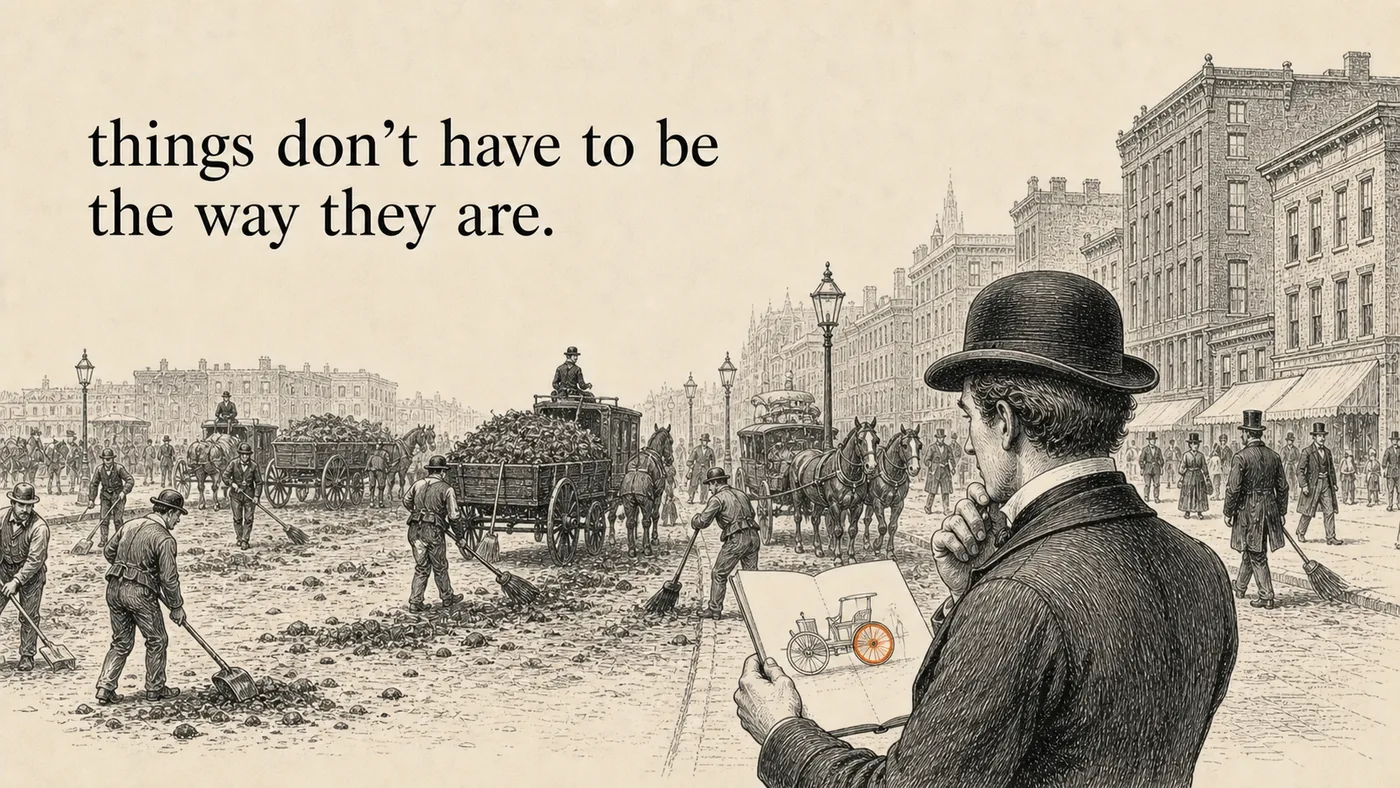
“It can be enormous fun to think up new ways of doing things and then to prove they are no mere pipe dreams by turning them into real, live products sold around the world. But another big motivation for inventors has been frustration: frustration about things that have been around for years, doing an okay job, but not anything like as good a job as they could. The breakthrough was realising that things don’t have to be the way they are.”
—James Dyson, History of Great Inventions
By 1900, the street cleaning crews of New York City were hauling away the 2.5 million pounds of manure that the city’s 150 thousand horses left behind every day. This was a “good enough” solution. Think about this! But the good enough mentality is absent for inventors, innovators, or entrepreneurs who envision a better world and pursue their vision fanatically till it’s realized.
“My own success has been in observing objects in daily use which, it was always assumed, could not be improved. By lateral thinking (the ‘Edisonian approach’), it is possible to arrive, empirically, at an advance.”
—James Dyson, Against the Odds
The starting point is often not a grand futuristic vision. It is noticing something familiar that everyone else has stopped questioning.
Ask: what’s the angle that no one notices?
Find errors in conventional wisdom. You won’t be successful doing the same thing as everyone else is doing.
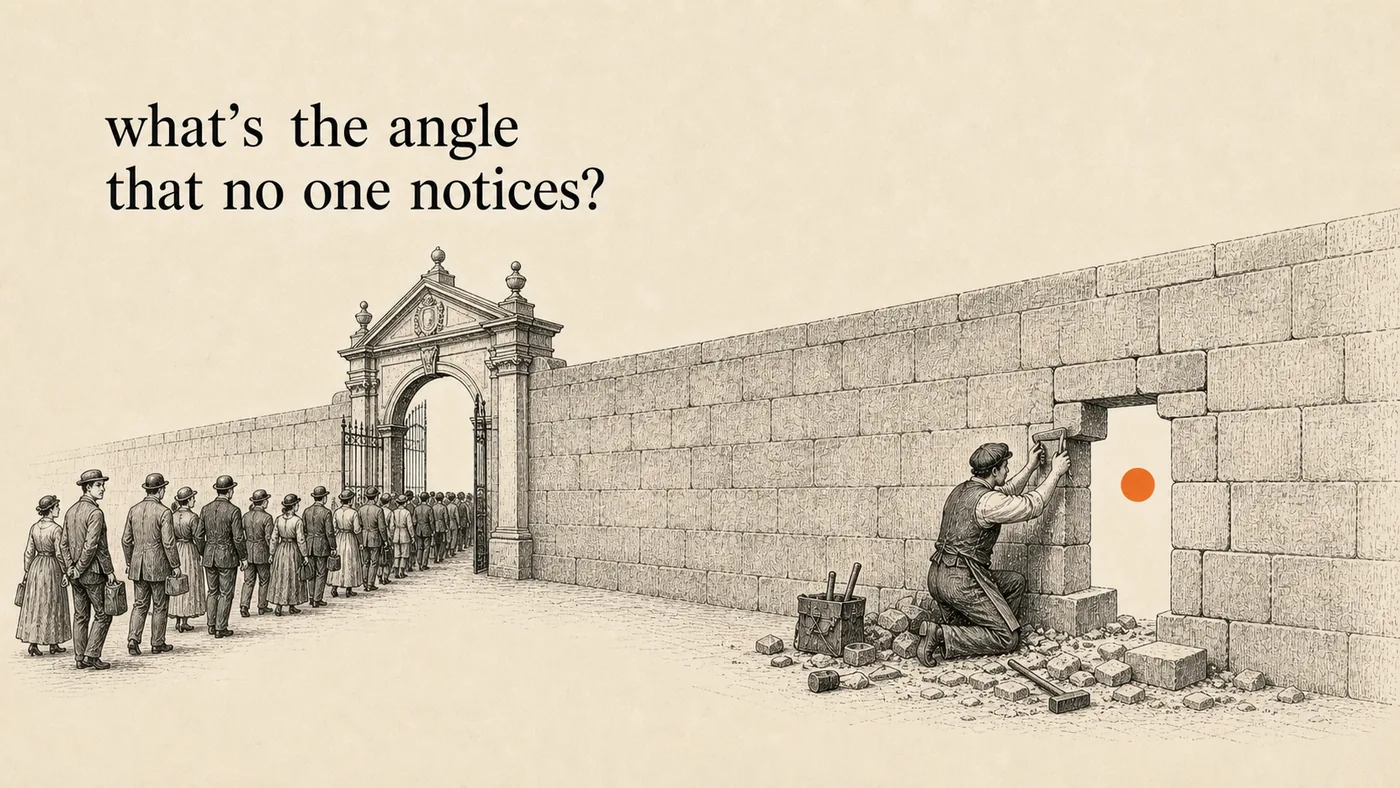
“Having new ideas is a strange game, because it usually consists of seeing things that were right under your nose. Once you’ve seen a new idea, it tends to seem obvious. When an idea seems simultaneously novel and obvious, it’s probably a good one. A new idea usually requires you to change the way you look at the world. It’s admitting to yourself that you have a broken model of the world. Broken models of the world leave a trail of clues when they bash against reality. Most people do not want to see these clues. It’s an understatement to say they are attached to their current model.”
—Paul Graham
The innovator follows the clues.
Reach the edge of what is possible
Before landing on a breakthrough idea, we often need to be on the cutting edge first. Steven Johnson, in Where Good Ideas Come From, calls the pattern the adjacent possible:
Technological (and scientific) advances rarely break out of the adjacent possible. The history of cultural progress is, almost without exception, a story of one door leading to another door, exploring the palace one room at a time. But human minds are not bound by the finite laws of molecule formation. So every now and then, an idea does occur to someone that teleports us forward a few rooms, skipping some exploratory steps in the adjacent possible. But those ideas almost always end up being short-term failures, precisely because they have skipped ahead. We have a phrase for those ideas: we call them “ahead of their time.”
And when it comes to innovation, “early” means “wrong.”

Johnson’s example is YouTube. Had Hurley, Chen, and Karim tried to execute the exact same idea ten years earlier, in 1995, it would have been a spectacular flop, because a site for sharing video was not within the adjacent possible of the early Web. The trick, he says, is to figure out ways to explore the edges of possibility that surround you.
To live in the future, first you need to be at the cutting edge of a trend or technology, either as the person developing that technology or as a user of that cutting edge technology/trend.
You cannot see the next door from the entrance of the palace. You have to enter the room that is open now, walk to its edge, and look around.
But being at the cutting edge does not mean staying inside one field.
Paul Graham argues for deliberate breadth: history is so full of chance discoveries made by carrying an idea from one field into another that it is probably worth giving chance a hand by deliberately learning about other kinds of work. You can take ideas from quite distant fields if you let them be metaphors.
To have great ideas, consume great ideas. The best thinkers are remixers.
It comes down to exposing yourself to the best things that humans have done, then trying to bring those things into what you are doing.
The raw material of original thought is often borrowed from somewhere else and recombined in a place where it has never been used.
“If I had to put the recipe for genius into one sentence, that might be it: to have a disinterested obsession with something that matters.”
—Paul Graham
Translation: Genius comes from being obsessed with something purely for its own sake, without being motivated by money, fame, recognition, or other personal benefits. It’s about having a pure, objective fascination with the subject matter itself. An obsessive interest in a topic is both a proxy for ability and a substitute for determination.
Graham on where they come from: the way to come up with new ideas is not to try explicitly to have them, but to try to solve problems and simply not discount the weird hunches you have along the way.
Follow the hunch before the market can explain it
Jeff Bezos calls that kind of search wandering. From his 2018 letter to shareholders:
Wandering in business is not efficient, but it’s also not random. It’s guided by hunch, gut, intuition, curiosity, and powered by a deep conviction that the prize for customers is big enough that it’s worth being a little messy and tangential to find the way there. The outsized discoveries, the non-linear ones, are highly likely to require wandering.
He gives two examples. No one asked for AWS. No one. The world was ready and hungry for an offering like it but didn’t know that yet, so they had a hunch, followed their curiosity, took the financial risk, and began building, reworking, experimenting, iterating countlessly.
Same for Echo. No customer was asking for it. If you had asked a customer in 2013, “Would you like a black, always-on cylinder in your kitchen that you can talk to and ask questions, which can turn on your lights and play music?” they would have looked at you strangely and said, “No thank you.”
This insight is repeated by several innovators in different ways:
- Steve Jobs: People don’t know what they want until you give it to them.
- Henry Ford: If I had asked people what they wanted, they would’ve said faster horses.
- Reed Hastings: Consumers don’t know what they want. We couldn’t have gone into focus groups and had them say, “Build me Netflix.”
- Peter Thiel: Customers won’t tell you how to build a great business. They only validate what already exists.
- Sam Altman: Big breakthroughs happen when something new is possible, not when there’s demand for it.
Akio Morita:
“Our plan is to lead the public with new products rather than ask them what kind of products they want. The public does not know what is possible. But we do. So instead of doing market research, we refine our thinking on a product and its use and try to create a market for it by educating and communicating with the public.”
This does not mean ignoring people. It means understanding the limit of asking people to describe a future they have never experienced.
“Daddy, why can’t I see the picture?!” Edwin Land’s 3-year-old daughter asking him in 1943, on a family vacation in Santa Fe, after he took a picture of her with a normal film camera. And then he walks the streets of Santa Fe for an hour and works out the camera, the film, and the physics in his head. The Polaroid Land Camera went on sale five years later.
The problem was real. The request was sincere. But the solution had to come from someone who could imagine what did not yet exist.
Innovation creates new economic relationships
The historical examples of winning innovators all created new economic relationships, not just better technology.
- Bezos didn’t invent e-commerce; he made it trustworthy, convenient, cheaper, faster.
- Uber didn’t invent ride-sharing; they made it instant and reliable.
- Google didn’t invent search engines; they made search results relevant and monetizable through AdWords, creating a new relationship between user intent and advertisers.
- Netflix didn’t invent video rental; they eliminated late fees and then made content infinitely accessible, changing the relationship from transactional to subscription.
- Airbnb didn’t invent vacation rentals; they made strangers trust each other through reviews and guarantees, creating economic value from unused bedrooms.
- Stripe didn’t invent payment processing; they made it possible to accept payments with 7 lines of code, turning developers into commerce enablers.
- Instagram didn’t invent photo sharing; they made everyone a photographer with filters, creating a new relationship between personal moments and public performance.
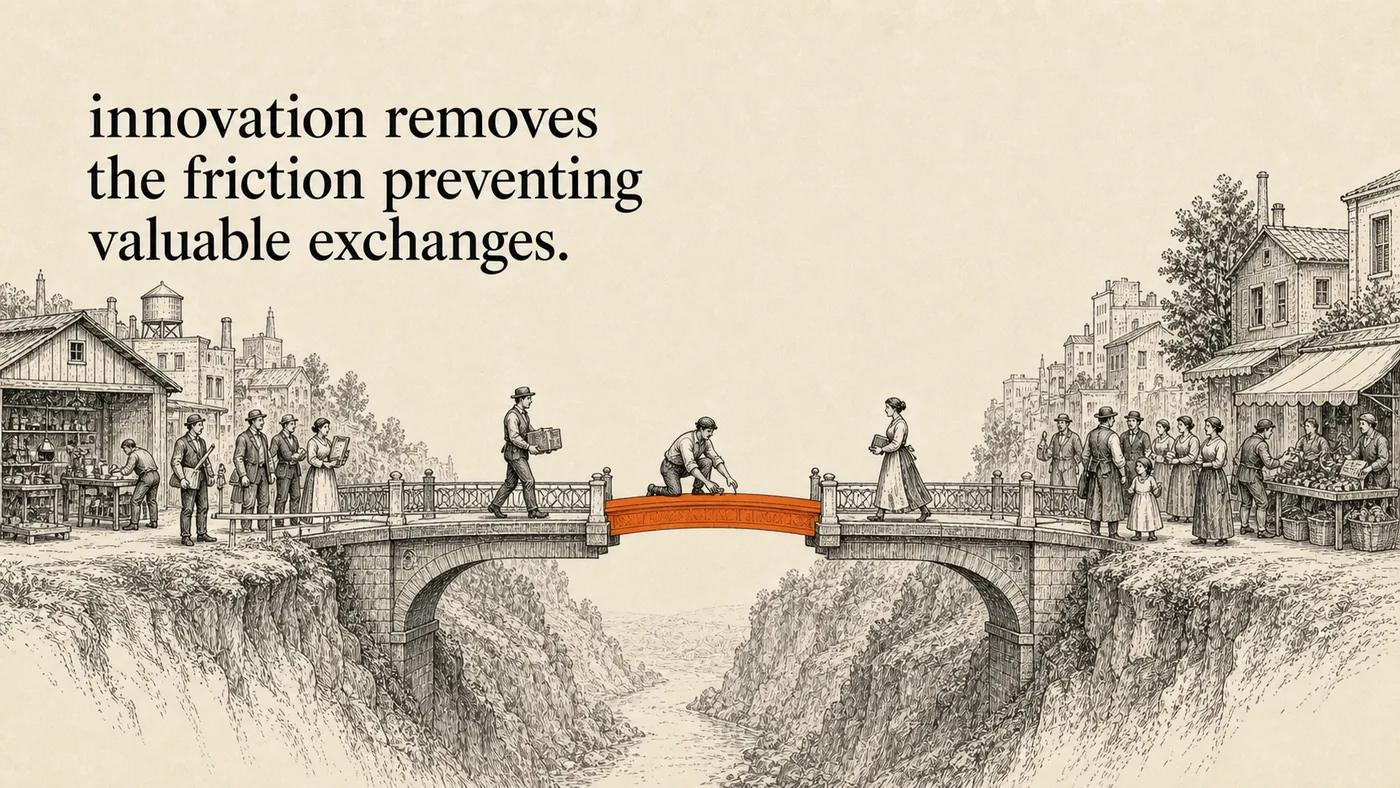
Winners identify a valuable transaction that should happen but doesn’t because of friction, then remove that friction.
The technology matters. But technology becomes innovation only when it makes a valuable exchange possible, useful, reliable, affordable, and accessible to the masses.
Who will build the applications of unlimited intelligence?
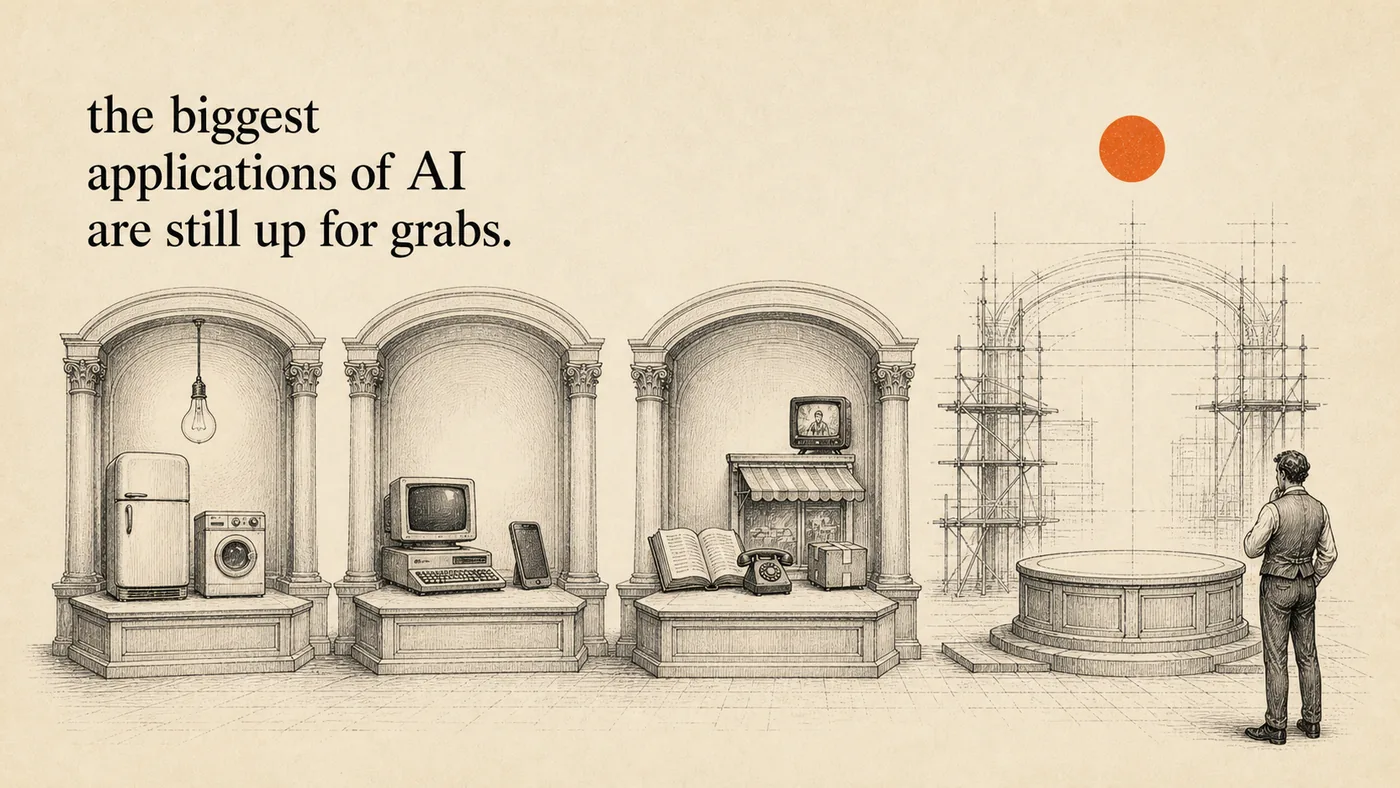
The mental model for thinking about the AI wave: GE won the electricity era by inventing “appliances” that freed up hours of labor (especially for women), contributing significantly to their emancipation. Rockefeller won hydrocarbons by building Standard Oil, turning oil into the building blocks of modern life. Bezos won the internet by turning it into an unlimited storefront, catalog, and distribution channel. Steve Jobs won silicon/compute by creating the ultimate interface: the personal computer and smartphone. And now the big question: Who will win the AI era by creating applications for “unlimited intelligence”?
The first waves of a general-purpose technology create possibility. The largest opportunities come from turning that possibility into applications that change everyday life.
- The light bulb.
- The refrigerator.
- The washing machine.
Arguably the biggest applications of electricity.
- Access to all human knowledge: Wiki.
- Online communication: WhatsApp.
- Online commerce: Amazon.
- Online entertainment: YouTube, social media, Netflix.
Arguably the biggest applications of the internet.
The biggest applications of AI?
Nobody has filled those in yet. Nothing so far comes close to the washing machine or the storefront.
The list is blank and it’s free to take.
For AI, the question becomes:
What valuable exchanges aren’t happening because:
- It’s too expensive to have expert judgment?
- It takes too long to process information?
- The right expertise isn’t available locally?
- People can’t articulate what they need?
- Trust hasn’t been established?
What new economic relationships could AI enable that aren’t possible today?
- What would you do with 1,000 PhDs in your pocket?
- What would your ideal future look like? Build that future.
- How can current experiences be 10X faster, cheaper, and better?
Then make the search concrete.
- Pick a specific niche where you have unfair advantages (knowledge, connections, passion).
- Build something people can use TODAY, not a grand vision for 2030.
- Get to real customers fast: the market will evolve too quickly for long development cycles.
Start small and evolve
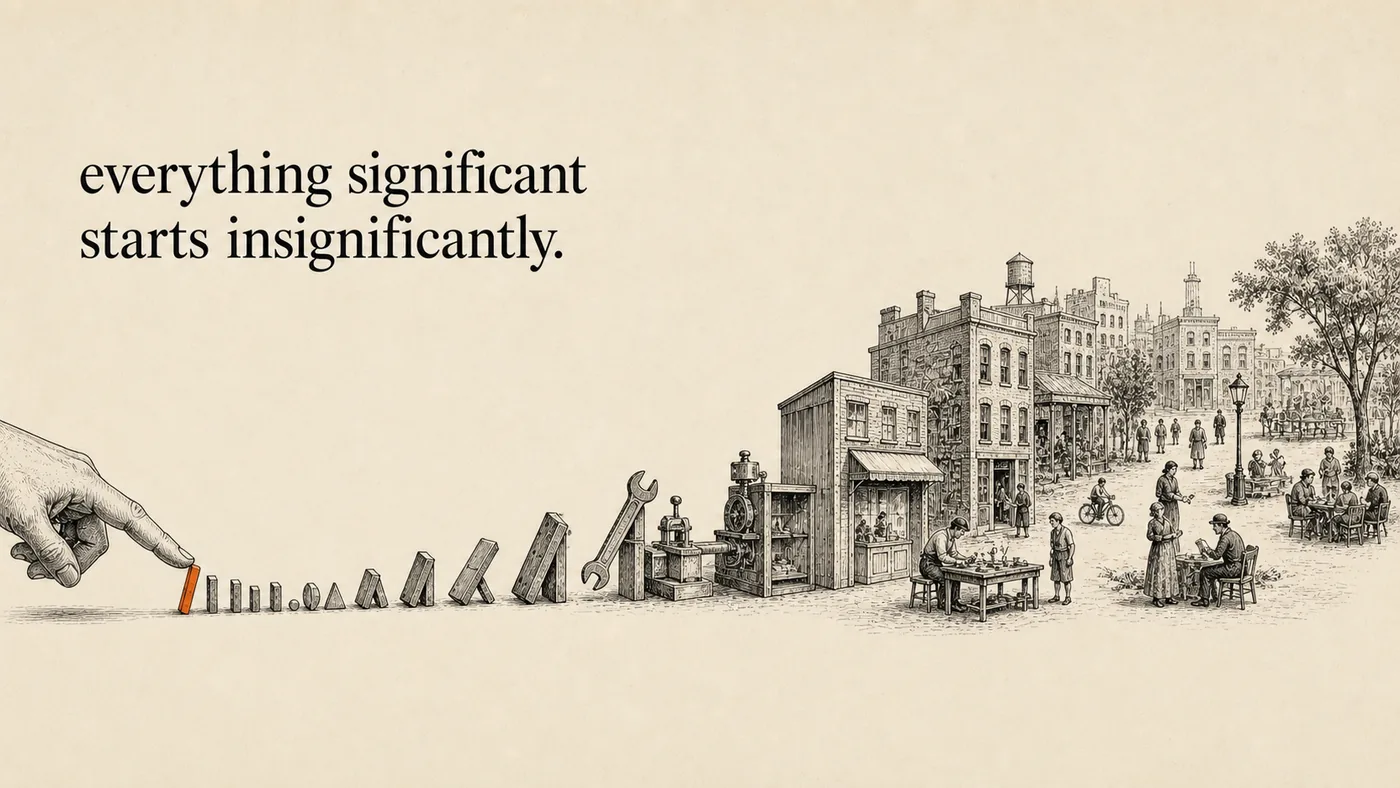
“Everything significant starts insignificantly. It starts small. How it grows to be significant? By making successive versions. Great things are almost always made in successive versions. You start with something small and evolve it. Begin by trying the simplest thing that could possibly work. Do not try to cram too much new stuff into any one version. Evolve instead.”
—Paul Graham
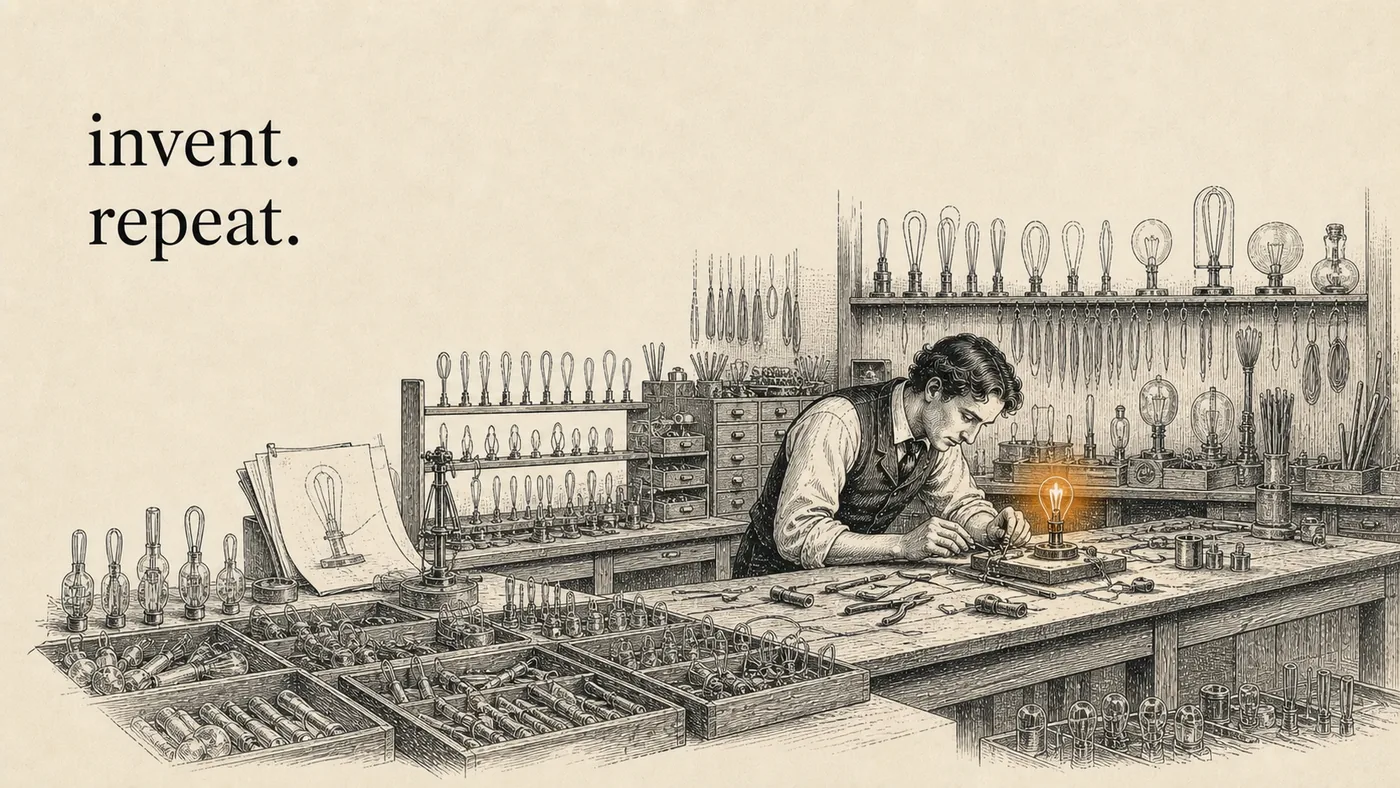
Edison had a bulb that lit up long before he had one worth selling. The search for the right filament ran on for months: beard hair, linen, wood, cotton. A carbonized cotton thread burned for thirteen hours in October 1879, and that was the breakthrough. Then his team worked through some 6,000 plant materials until carbonized bamboo glowed for well over a thousand. Hack an initial version 1.0 fast. But improve 1% daily till you can’t live without it.
The first version proves that the idea can exist. Successive versions make it matter.
“As I progressed, I realized that art and science, inventing and making, thinking and doing could be one and the same. I dared to dream that I could be engineer, designer, and manufacturer at the same time.”
—James Dyson
When an idea comes, don’t sit down and process it through pages of calculation. Don’t argue it with anyone. Just try to build it. The root principle is to do things your way. It doesn’t matter how others did it. It doesn’t matter if it can be done better. As long as it works and it’s exciting, people will follow you.
The fastest way to learn what an idea wants to become is to give it a form.
The fastest way to fail at inventing something is by making it somebody’s part-time job.
Difference is the point
It’s easy to mimic others. It’s hard to think for yourself.
- Edwin Land: Don’t do anything someone else can do.
- Steve Jobs: Don’t live someone else’s life.
- Jeff Bezos: Differentiation is survival and universe wants you to be typical; don’t let it.
- James Dyson: Do things your way.
- Paul Graham: Build what you want.
We don’t all want to sing the same song and look at the same painting. We want difference and originality. Different products working in different ways and achieving different objectives.
“Difference for the sake of it. In everything. Because it must be better. From the moment the idea strikes, to the running of the business. Difference, and retention of total control.”
—James Dyson, Against the Odds
Look for virgin territory to identify opportunities.
The right path for game-changing founders isn’t a path yet. It doesn’t exist. It’s uncharted.
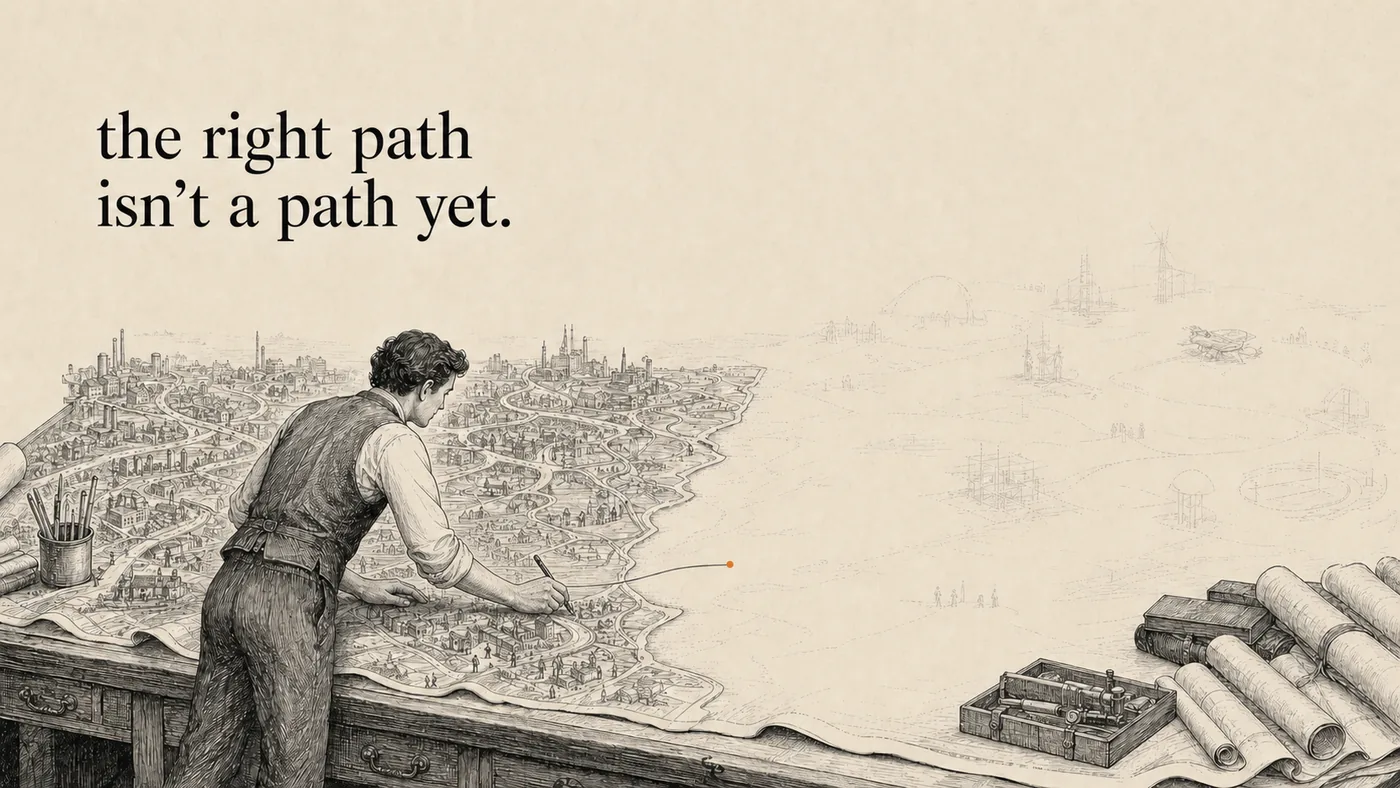
Incumbents struggle here because the path they already chose becomes the limit of what they can imagine.
Incumbents all over the world can’t imagine a different future. And that’s the crack that disruptors exploit. Charlie Munger calls it commitment and consistency bias. Once you’re all in on a path, changing feels impossible, even when the evidence screams otherwise. This psychological trap transforms market leaders into sitting ducks.
Progress depends on unreasonable people who want to change the world to fit them. Not the other way around.
Be different. Be right. That’s the challenge of an innovator.
Make people see what you see
Recognizing an important idea and building the first version are not enough. New ideas initially look strange, unnecessary, or wrong.
“It is hard for most people to understand or get excited by a new idea. This requires self-reliance and faith on the part of the inventor.”
—James Dyson
Howard Aiken put it bluntly: don’t worry about people stealing your ideas. If your ideas are any good, you’ll have to ram them down people’s throats.
Only the arrogant are self-confident enough to push their ideas onto other people. When you create a new product, it will face indifference. No one is going to give a sh*t. You have to be the one pushing your new product past indifference. You have to make people care about it.
This is where communication becomes part of invention.
Reality is subjective. You can bend it to your will if you’re able to communicate to people who matter, in the ways that strike them in the heart and in the mind, to get them to see the world the way that you do.
Reality bends to whoever tells a better story.
Your communication power increases as your conviction, self-confidence, and certainty goes up. If you have complete confidence that this thing that you’re doing is right, and you’re going to win, and it’s inevitable, and you share that with people, they will feel that emanating from you, and it’s very hard to resist.
Commercializing an idea means educating the public, building trust, reducing friction, and making a new behavior feel inevitable.
The price of changing reality
The road of a pioneer, the seeker of the unknown, is paved with difficulties.
I’d rather have a high probability of failure & a large consequence of success than reduce risk to the point where my probability of success is high & the consequence of success is inconsequential. Without being willing to fail, you’re not going to succeed in a big way.
You can beat almost anyone at anything if you’re willing to fail twenty times in a row, look stupid in front of people you care about, and keep going long after it stopped being convenient.
This recipe increases the odds of success big time. Operate in a way so you can have many shots at something without being wiped out. Probability can be hacked into your favor if you know how probability works.
Long-term advantage in business comes from being comfortable looking like a fool in the short-term.
“People thought John D. Rockefeller was crazy for 30 years until he was the richest man on the planet.”
—Michael Saylor
It takes a fanatic and stubborn visionary, a semi-delusional optimist, to realize anything of great value/importance.
Nothing ever happens unless someone pursues a vision fanatically. Because stubborn obsession is the activation energy of innovation. The reaction won’t start unless someone insists hard enough to break old bonds and form a new reality. If you don’t impose your idea on the world, the world will impose its inertia on you. Reality yields only to pressure. Future bends only for the determined.
Napoleon:
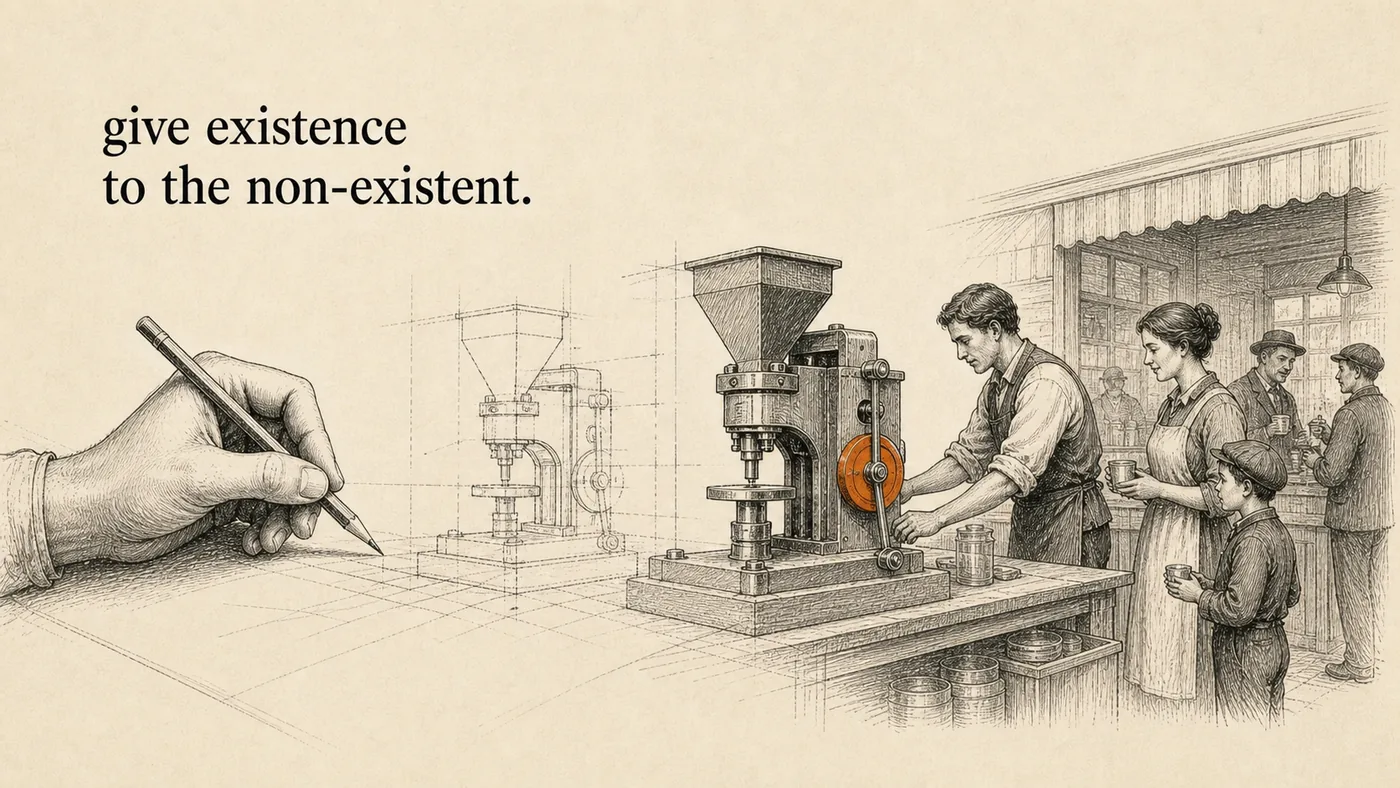
“The greatest improvisation of the human mind is that which gives existence to the non-existent.”
He definitely had the founder mentality!
The work is difficult even before competitors appear. But constraints can become an advantage.
Nothing forces creativity out of you like constraints.
If you’re going up against giants with endless resources, that’s your edge.
- They have abundance.
- You have constraints.
And that makes you more creative than they’ll ever be.
Because abundance destroys motivation.
Motivation to:
- Come up with efficient solutions.
- Plan and execute with precision.
- Think twice before you make a move.
- Question every assumption.
- Make every dollar/hour/decision count.
Scarcity breeds urgency.
Urgency fuels focus.
Focus unlocks clarity.
And clarity wins.
- Apple had it when IBM didn’t.
- Dyson had it when giants laughed.
- Netflix had it when Blockbuster blinked.
Abundance makes you lazy.
Scarcity makes you dangerous.
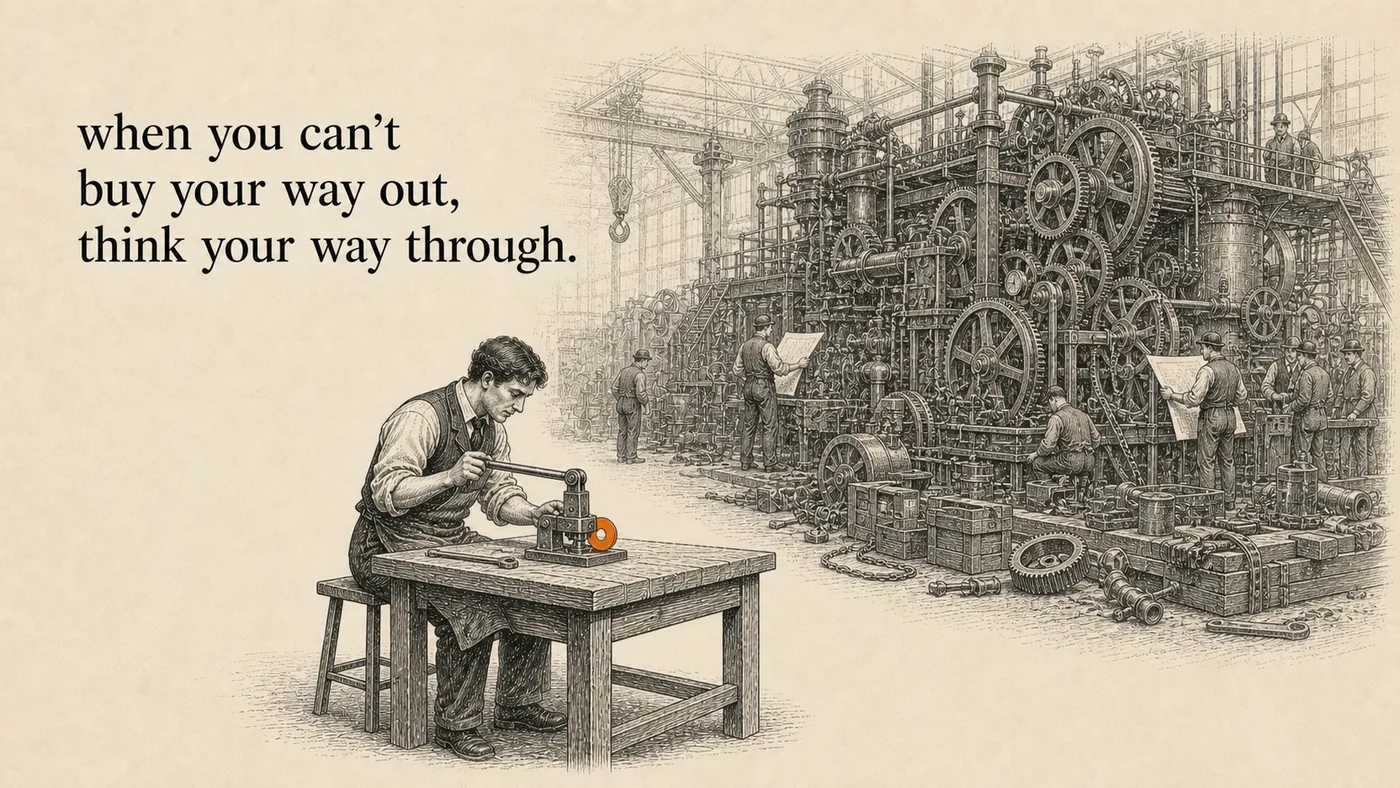
When you can’t buy your way out, you have to think your way through.
Get your music out
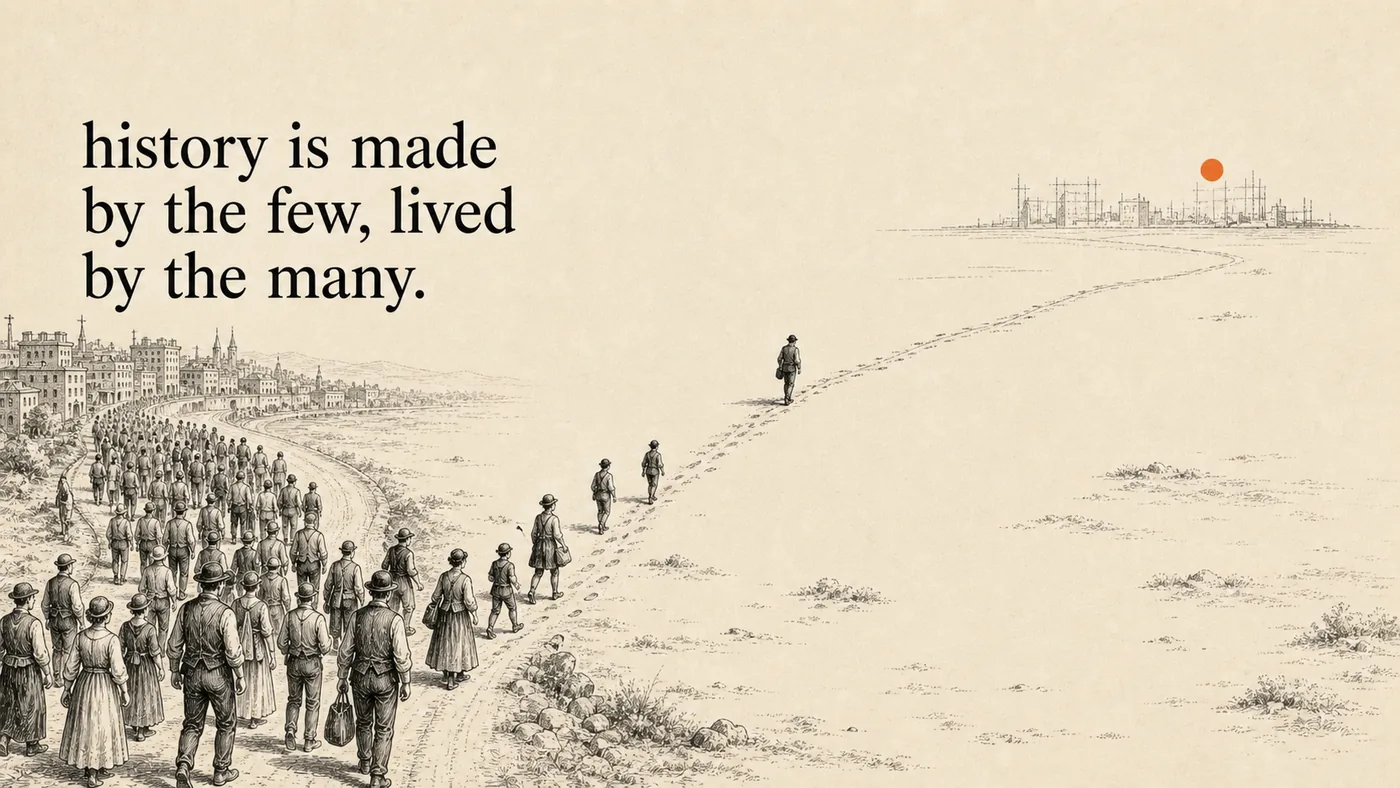
History is made by the few, lived by the many. It unfolds through the dynamic interplay of innovators and imitators. Change happens because a few originative individuals start the chain reaction that the rest of society eventually absorbs.
Will Durant put it this way: the imitative majority follows the innovative minority, and this follows the originative individual.
It’s hard to stop an idea whose time has come.
The greatest leaders change how millions live. True leadership reshapes the way we think, work, and create. Edison. Jobs. Bezos. They didn’t just build companies, they changed the way the world runs. I admire such leaders and try to learn from them and follow their example.
The world is a museum of passion projects. Everything around us is someone’s lifework.
“Everything around you that you call life was made up by people that were no smarter than you. And you can change it, you can influence it, you can build your own things that other people can use.”
—Steve Jobs
Some of us have some good music inside. To those people I say: get your music out.