← all book reviews · review 46 / 82
thinking
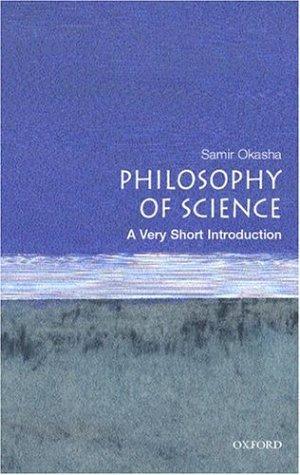
Philosophy of Science
rated 5 out of 5read february 2023
notes · 1 min read

Read Daniel's notes about Philosophy of Science on the booksense app
open booksense →Not all facts have the same level of truth in them.
Some are inferred from shakier assumptions, while others are concluded from more reliable grounds.
We can define science as an attempt to understand, explain and predict the world we live in.
And some of the distinguishing features of science lie in the particular methods scientists use to investigate the world.
Some of the main features of scientific inquiry are experimental testing, observation, theory construction, and deductive & inductive inferences.
Here, enters the philosophy of science.
The principal task of the philosophy of science is to analyze the methods of inquiry used in sciences. And part of this job is to question assumptions that scientists take for granted.
What criteria can be a distinguishing factor between science and pseudoscience? And does it make any sense to have this distinction in the first place?
Should deductive reasoning be the only way to make scientific inferences?
What role do probability and causality play in scientific inferences?
Does the empirical success of a theory make it true?
Does the simplicity of a theory make it superior to a more complex one?
Inductive reasoning in a way assumes the uniformity of the universe, but do we have uniformity in the universe?
And much more…
Packed with intellectual arguments and scientific debates on major controversial topics in science.
This book was super fun to read. I loved it!
Happy reading! 📙