← all book reviews · review 4 / 82
building
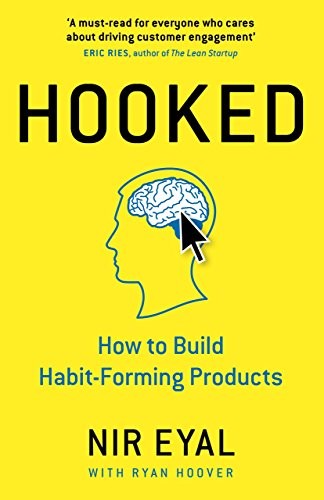
Hooked
rated 5 out of 5read january 2023
notes · 1 min read

Read Daniel's notes about Hooked on the booksense app
open booksense →Building habit-forming technologies is a business defensibility strategy, but not all product categories can be habit-forming.
Habit-forming tech is considered a business moat (a strategy that keeps competitors at bay) because it increases CLV (Customer Lifetime Value) and organic growth rate while providing more pricing power to the business.
As customers form routines around a product, they come to depend upon it and become less sensitive to price.
Also as they store more value in a product, they increase their dependency on it and it becomes less likely for them to consider other alternatives.
To decide if a product has the potential to become habit-forming, we can look at 2 main factors:
- The frequency of use: how often the behavior occurs
- The perceived utility: how useful and rewarding the behavior is in the user’s mind
Without frequency, you can’t build a habit, even if the perceived utility is high.
But a habit can form if there is enough frequency, even if we have little perceived utility for the product.
The book provides a framework called The Hook Model, that can be used to design habit-forming products:
- Trigger
- Action
- Variable Reward
- Investment
It was very well written and packed with insights about building products that can help people do what they really want, but for lack of good product design, don’t.
It took me ~11 hours to read with many highlights.
Nir Eyal I enjoyed your work very much!
Happy reading! 📙